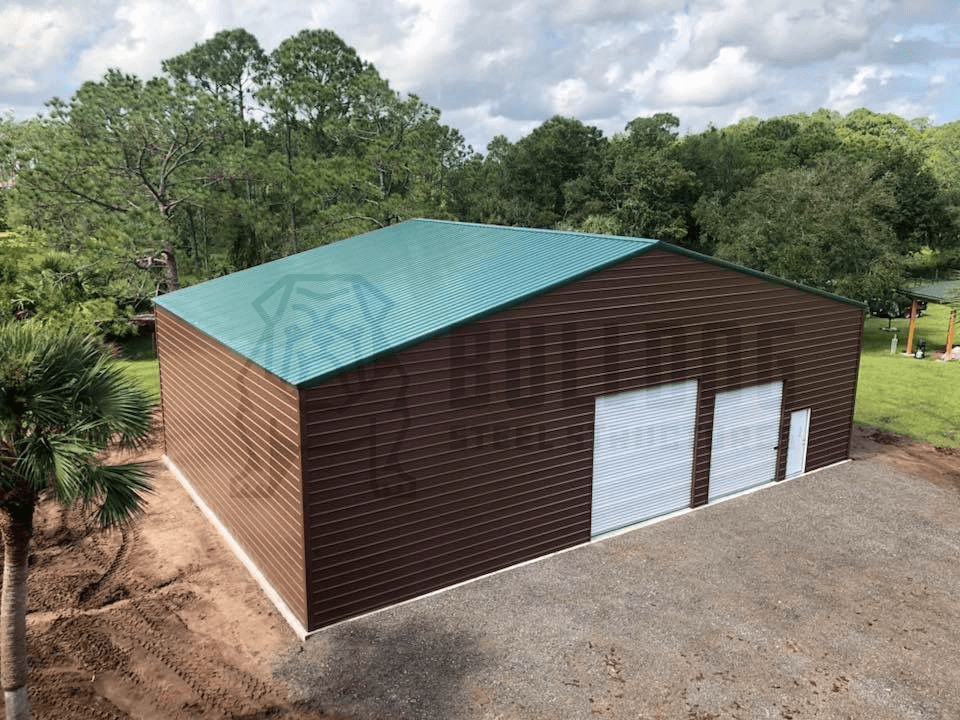
Choosing the color of your metal building is one of the few decisions that affects how your building looks every single day for the next 30 to 50 years. Get it right and your building blends into the landscape or stands out exactly the way you wanted. Get it wrong and you’re staring at a color you don’t love until the next repaint.
After delivering thousands of metal buildings across the country, we’ve watched color preferences shift year by year. Some colors stay popular decade after decade. Others come and go. Here’s an honest look at what’s trending in 2026, which colors actually hold up over time, and how to pick a combination you’ll still love years from now.
The 7 Most Popular Metal Building Colors for 2026
Here are the colors customers ask for most often this year, with honest notes on what each one is best for and what to consider before choosing it.
1. Charcoal Gray
Charcoal gray has been the runaway favorite for several years now and shows no signs of slowing down in 2026. It’s a deep, warm gray that reads modern without being trendy, hides dirt and rain spots better than lighter colors, and pairs well with almost any trim — white, black, barn red, or natural wood.
Best for: Modern residential garages, workshops, suburban properties, contemporary commercial buildings. Trim recommendation: white or black for high contrast, or matching gray for a sleek monochromatic look.
2. Barn Red
Barn red is the classic that never goes out of style. It’s been the default color for agricultural buildings for over a century, and it remains the top choice for barns, country properties, and anything rural. There’s a reason for that: it works against green pastures, brown fields, and gray winter skies equally well, and it ages gracefully.
Best for: Barns, agricultural buildings, country properties, anything with rustic intent. Trim recommendation: white trim is the classic pairing; black trim makes it look more modern.
3. Forest Green
Forest green has overtaken many lighter greens in recent years because it photographs better, looks intentional rather than dated, and blends naturally into wooded properties. If your building is surrounded by trees or sits at the edge of a forest, forest green helps it disappear into the landscape instead of standing out as a foreign object.
Best for: Wooded lots, hunting cabins, properties surrounded by trees, anything you want to blend in. Trim recommendation: white, beige, or natural wood-look accents.
4. Sandstone Beige
Sandstone beige is the safe, warm neutral that works almost anywhere. It’s a slight step warmer than pure beige, with subtle undertones that make it look more natural than industrial. It’s especially popular in the Southwest, on desert properties, and on homes with stone or brick exteriors where it picks up the natural tones.
Best for: Homes with brick or stone exteriors, Southwest properties, anyone who wants something neutral but warmer than gray. Trim recommendation: deep brown, bronze, or black.
5. Matte Black
Matte black has surged in popularity for modern residential and high-end commercial builds. Unlike glossy black (which shows every speck of dust), matte black has a sophisticated, architectural look that pairs beautifully with wood accents, large windows, and minimalist design.
Best for: Modern homes, contemporary commercial buildings, urban properties, anything aiming for a bold architectural look. Trim recommendation: natural wood, brushed metal, or white for striking contrast.
6. Arctic White
Arctic white (or pure white) is the choice for buyers who want a clean, classic look or who plan to use the building as a workspace where natural light matters. White reflects heat better than dark colors — a real benefit in hot climates — but it shows dirt more quickly and requires more frequent cleaning.
Best for: Workshops, commercial buildings in hot climates, residential garages in coastal areas, anyone prioritizing brightness. Trim recommendation: black for crisp contrast, navy or red for a nautical look.
7. Rustic Brown
Rustic brown is having a moment in 2026, especially for properties that want a wood-like warmth without the maintenance of actual wood. It pairs beautifully with stone foundations, log home aesthetics, and rural settings.
Best for: Log-style homes, mountain properties, barns with rustic intent, properties with stone or wood elements. Trim recommendation: cream, sandstone, or matching dark brown.
Also Read: The Pivotal Role of Technology in Shaping Metal Building Costs
The Best Color and Trim Combinations
Most metal buildings have three color decisions to make: the walls (siding), the roof, and the trim. Getting these to work together is more important than picking any single color. Here are the combinations that consistently look great:
Wall Color | Roof Color | Trim Color | Look / Style |
|---|---|---|---|
Charcoal Gray | Black | White | Modern, high-contrast, suburban |
Barn Red | Black or Galvalume | White | Classic rural, agricultural |
Forest Green | Black | Beige or White | Wooded property, blend-in |
Sandstone Beige | Brown | Bronze or Dark Brown | Southwest, warm earthy |
Matte Black | Black | Natural wood-look | Modern minimalist, high-end |
Arctic White | Black or Charcoal | Black | Clean, bright, classic |
Rustic Brown | Brown or Black | Cream or Beige | Cabin, mountain, rustic |
Light Gray | Charcoal Gray | White | Soft modern, suburban |
If you’re not sure where to start, use the same color for walls and roof and pick a contrasting trim — that combination almost never goes wrong. The most common mistake is picking three colors that all compete with each other.
How to Choose the Right Color for Your Building
Trends are a starting point, not the final answer. The color that looks great in a magazine may look completely wrong on your specific property. Here’s how to think about it:
Look at What’s Around You
Stand where the building will go and look around. What colors do you see? Forest greens and browns dominate a wooded lot. Sandstone and tan dominate desert properties. Reds, whites, and weathered grays dominate farms. Your building either needs to harmonize with those surroundings or contrast with them intentionally — never accidentally.
Consider What the Building Is For
A metal barn has different expectations than a modern metal garage or a commercial building. Barn red on a contemporary residential garage looks out of place. Matte black on an agricultural barn looks pretentious. Match the color choice to the building’s purpose.
Think About Climate
In hot, sunny climates, dark colors absorb more heat and increase cooling costs if the building is climate-controlled. Light colors reflect heat and keep interior temperatures lower. In cold climates, the opposite can be true — dark colors absorb solar heat and help reduce heating costs in winter.
Consider Maintenance
Light colors hide dust and pollen but show dirt, water spots, and mildew. Dark colors hide dirt but show dust, pollen, and bird droppings. Mid-tone colors like charcoal gray and sandstone beige hide both reasonably well, which is one reason they’re so popular.
Match Your Existing Buildings
If your new metal building is going on a property with an existing home, barn, or shop, the easiest path is to match or coordinate with what’s already there. A new building that picks up the color palette of the main house ties the property together visually and almost always adds more value than one that clashes.
Think 20 Years Out
Trendy colors get tired. A neon green metal building was very 2010s; it doesn’t look fresh today. Stick to colors that have been popular for at least 10 years (charcoal, barn red, forest green, sandstone, white, black) and you’ll still like them in 2046.
Beyond Standard Colors: Textured and Specialty Finishes
Most metal buildings use standard smooth painted finishes, but a growing number of customers are asking about specialty options:
- Woodgrain finishes: Panels with a printed or embossed wood-look texture that give you the rustic appearance of a wooden building without the maintenance. Increasingly popular on cabins and country properties.
- Brushed metal: A subtle textured finish that catches light differently throughout the day. Premium and modern, though more expensive than standard paint.
- Galvalume: A natural silver-gray steel finish that’s actually unpainted. It’s incredibly durable, never needs repainting, and develops a beautiful patina over decades. Most common on agricultural and industrial buildings.
- Two-tone wainscoting: A different color on the bottom three or four feet of the walls. Adds visual interest and helps hide dirt in the splash zone where rain bounces up from the ground.
Specialty finishes typically cost more than standard colors, but they give your building character that mass-produced buildings can’t match. If you want something that doesn’t look like every other metal building, this is where to spend the upgrade dollars.
Frequently Asked Questions
What is the most popular color for metal buildings?
Charcoal gray has been the single most popular color for metal buildings for the past several years and continues to lead in 2026. It works with almost any trim color, hides dirt and water spots well, looks modern without being trendy, and stays in style across decades. Barn red and forest green follow closely behind, especially for agricultural and rural properties.
What metal building color is best for hot climates?
Light colors like Arctic White, Sandstone Beige, and light gray are best for hot climates because they reflect more sunlight and absorb less heat than dark colors. This keeps the building interior cooler and reduces cooling costs if the building is climate-controlled. If you prefer a darker look in a hot climate, choose a mid-tone color like charcoal gray rather than pure black.
What metal building color hides dirt the best?
Mid-tone colors like charcoal gray, sandstone beige, and rustic brown hide dirt the best because they don’t show light dust, pollen, water spots, or bird droppings as easily as either very light or very dark colors. Pure white shows dirt fastest; matte black shows dust and pollen most. If low-maintenance appearance is a priority, charcoal gray is the safest pick.
Should the roof and walls of a metal building be the same color?
Not necessarily. Matching wall and roof colors creates a clean monochromatic look that’s currently very popular, but contrasting roof colors (such as black roof on charcoal gray walls, or darker roof on lighter walls) add visual interest and architectural depth. The most important rule is that the roof and walls should look intentional together — not like they were chosen separately.
What is the most timeless color for a metal building?
Charcoal gray, barn red, and Arctic white are the three most timeless metal building colors. All three have been popular for decades, look appropriate in nearly any setting, and don’t read as ‘dated’ the way trendy colors can. If you want a color you’ll still love in 20-30 years, one of these three is the safest choice.
Do darker metal building colors fade faster?
Yes, darker colors typically show fading more visibly than lighter colors because the color shift is more dramatic. Modern panel coatings have improved significantly and most quality metal buildings come with multi-decade warranties against fading, but darker colors will generally show more visible weathering over 20-30 years than lighter colors. Choosing a quality panel with a strong paint warranty is more important than the color itself for fade resistance.
Can I change the color of my metal building later?
Yes, you can repaint a metal building to change its color, though it’s a significant project. The surface needs to be properly cleaned, primed where rust or chalking exists, and painted with metal-rated exterior paint (acrylic latex DTM or alkyd enamel). For more details, see our guide on how to paint a metal building. Because repainting is a substantial undertaking, it’s worth taking the time to choose a color you’ll love long-term.
What trim color goes with everything?
White trim is the most versatile and works with virtually every wall color — it’s the closest thing to a universal trim choice. Black trim runs a close second and looks more modern, working especially well with charcoal gray, forest green, barn red, and sandstone beige. If you can’t decide, white trim is the safe pick that almost never looks wrong.
Build Your Perfect Metal Building With Bulldog Steel Structures
Choosing the color of your metal building is one of the most enjoyable parts of the process — and one that affects how much you’ll love your building every day for decades. Whether you want a classic barn red, a sleek charcoal gray, or something that blends quietly into your wooded property, the right color makes your building feel like it belongs.
At Bulldog Steel Structures, we help customers across the country design buildings that fit their property and their style. With dozens of color combinations, trim options, and roof styles available, we’ll help you build something you’ll be proud of for years to come. We also offer financing options and rent-to-own programs with no credit check to make your dream building more affordable.
Ready to start? Use our 3D estimator to see your color combinations on your actual building size, or request a free quote and we’ll walk you through every choice.
What Our Customers Are Saying
I'm really happy with the way my building turned out! Due to living in city limits I had to make changes to my original plan but working with Bryan made it easy. He was great to work with!
Corey Evans
Bulldog Steel Structures is fantastic. We had a 24'x40' garage built with two 10' garage doors, an entry door, two windows and fully insulated for under $16,000. The whole experience was so easy. Our salesman was Bryan Valadez. Bryan was so helpful and was easily available to answer my questions. Rebekah Aldridge handled all the documents and signing of them. The whole process was great. The building is well constructed and the crew that erected it were courteous and cleaned the worksite afterwords thoroughly. They did an excellent job in a time efficient period. Our experience with Bulldog Steel Structures was just great and we highly recommend them.
Mattie Roberts
I'm in early stages, just put deposit on building. I reviewed about 10 quotes and worked with many vendors in the space to assess. Constance from Bulldog Steel Structures made the experience fabulous and was key in our decision making. It's so refreshing to see a company like this have such outstanding client facing service. We are excited and huge shout out to Constance and the team. Bravo!
Max Escuder
I have purchased two structures/buildings from them and have been greatly satisfied. From "idea to implementation" it has gone smoothly. I love the idea of having one single point of contact (Noah) for any questions or concerns. The install crew comes in and gets right to work and the quality is the best I have seen. Highly Recommend!
Ron Barnes
I worked with Bryan Valadez in putting together my bids for a 2000 SF shop/garage. He was great to work with, very quick to respond and answered all my questions and concerns during several very thorough conversations regarding my project. I recommend you give Bulldog a shot when searching for your next building, their pricing was very good compared with some of the others, and they just seemed to have it very together for their process. Great Job, thanks Bryan. Jason
Jason Ford
Showed up on time and excellent quality. Could not be more pleased with the results!
Drew Hood
I called and spoke to Bryan. With some back and forth he helped me finalize the design (40x100 foot print). I placed my order and had to wait for my King County building permit to be issued. Once the slab was completed the installation team arrived with all the pieces. They got right to work and the building was completed in 8 days !!! I would highly recommend Bryan and Bulldog to any one :) Many thanks john in the pacific northwest
John Marcus
Great company to do business with. Would recommend them to others.
Webster Smith
Great to deal with. Building went up with no problems.
Florida Chapter POCI
I had a great experience with Bulldog Steel Buildings. The representatives were able to help me move from the online design to an actual building design to meet my goals. They set up the delivery and installation which turned out great. Installation was scheduled quickly after the foundation was done; and the building was completed within 2 days. Pricing was reasonable, and I'm very pleased with my new building.
David Grover
Bryan was great- honest, helpful, responsive and knowledgeable. I will call him if I ever need another steel building
Allan Brown
This company is the real deal. They go over and beyond to satisfy their customers. It is a joy to work with them. They are very knowledgeable and efficient. I looked forward to finishing my project with them.
David Thomas
Humberto was very responsive and it was a pleasure to work with. He went above and beyond to get delivery scheduled as soon as possible for our 30x50 building. Great company to work with.
Kelly Heckel
Hey folks - these people at Bulldog are real. Noah helped me all the way through - extremely patient and knowledgeable. He answers most often and when he doesn't it's easy to get another HUMAN to speak with. I looked at several companies for this project - I settled on the right one. If you wind up doing business with Brian - you're in luck there to. Outstanding work - worthy of trust.
Randall Drew
I purchased a 26x32 Garage from Bulldog Steel Structures they had it finished in two days. It looks really nice and the install crew was great. I’m thinking of getting another building and I will definitely contact Bryan Valadez again at Bulldog.
Kris Phillips
Great experience from start to finish. The sales process was easy and Casey helped me revise my plans several times to get the right building for my needs. Communication was excellent! The build crew was on time, friendly and professional. Beto took the time to understand what cutouts I needed and why I needed them in the sizes planned. Exceptional work. Highly recommend. Thank you!
Damon Trim
I would recommend Bulldog Steel Structures highly. They are very professional and accommodating. Want to give special thanks to Randall Hall and also matt preslar. They were very accommodating and helping me fill out paperwork and handling things when a timely basis. The building we were very satisfied with and the installers also were very polite and had things done on a timely basis. Thanks again Randall and Matt you`ve got my five star rating
Shirley M.
Bulldog has been great to work with. They explained everything from beginning to end. I live in the mountains of New Mexico and the staff made sure that my garage had the right support needed for this area of the country. I would highly recommend them for anyone building a new carport or gaeage!
Bruce J.
Good design tool on their website. Great customer service.
John S.
Have had nothing but a positive experience with Bulldog! Bryan was super helpful and still is after our install! He still responds super prompt and helpful. No complaints about our structure, as it looks amazing! Installers did a great job and picked up very nicely after they were done. Highly recommend!!
Kristie S.
I have now had my building in place for 3 months and I want to say that the whole team at Bulldog was very helpful throughout the entire process. My salesperson, Matthew, was extremely responsive. He was very helpful with the design phase, where we went back and forth with 3-4 different designs before settling on the perfect one. He always got back to me right away when I had a question. Although the delivery was delayed, understandable with the pandemic, he helped interface with Carolina Carports when I had delivery questions. So far I have no issues with the completed building. No leaks and all the doors are functioning perfectly. I would highly recommend using Bulldog for all your metal building needs.
Mike W.
Frank Rangel was very helpful and respectful. Also very understanding. I was pouring a concrete driveway and trying to put my down payment down. I may of got a little frustrated in the middle of it all. I could see the smile on Frank`s face the whole time! Thank you sir!
Jason M.
This is my second building from bulldog and I`m buying the same building , just different colors. They are great buildings that are strong and economical.
Parke H.
Excellent customer service during my order process, answered all my questions and they were very patient.
Jack D.
The website was very flexible and helped me customize my carport. The Bulldog staff was very prompt and helpful throughout the process.
Dale & Karen W.
Put up a RV cover for me on a concrete pad. Turned out great and the guys cleaned up after the work. Very satisfied. Would recommend these people.
Dan and Linda I.
I love my “She Shop.” It was amazingly easy. I sent an email, made 2 phones calls and it was done. The installation went even easier. Three guys showed up one day and finished the next. They were polite and cleaned up after themselves. My husband’s friends are all very impressed with the construction and materials used but were amazed at the reasonable price. I could not be more pleased. Thank you
DTheressa J.
I visited their website and used the 3D estimator and was able to see my building with doors, window placements, colors,and overall look. When you add or change any feature, including size, you can immediately see the result and change in price (if any). You can rotate the structure to see the overall look and framework. Once I placed my order, it was quickly and efficiently handled and the cost was lower than the estimate on the website The installers showed up early one morning and by noon the next day they had completed the structure. Everyone that comes by remarks on how nice it looks. I am very pleased with every aspect from ordering to installation.
David T.
Delivering & installing throughout the United States
Bulldog’s metal barns, garages, and carports are available for delivery and installation in most of the U.S. Whether you’re a homeowner in Maine, a rancher in Texas, or a small business owner in California, you’ll get to-your-door delivery and professional installation, so your building will be sturdy and reliable for years to come.