hero bg
Home
Metal Building vs Wood

Why Buy a Metal Building Instead of Wood?

Longer life, lower upkeep, and no rot, rust-through or termites

Steel Wins on Everything Except the Look

A metal building outlasts a wood one, costs less to maintain, and won't burn, rot, or feed termites. Bulldog Steel Structures buildings carry a 20-year limited rust-through warranty, resist winds up to 170 mph, need only a rinse once or twice a year, and are engineered for your county's snow load.

Wood has a mild insulation advantage in a bare shell and a traditional look. On every other measure — lifespan, upkeep, fire, pests, wind, snow, lifetime cost and resale — steel wins.

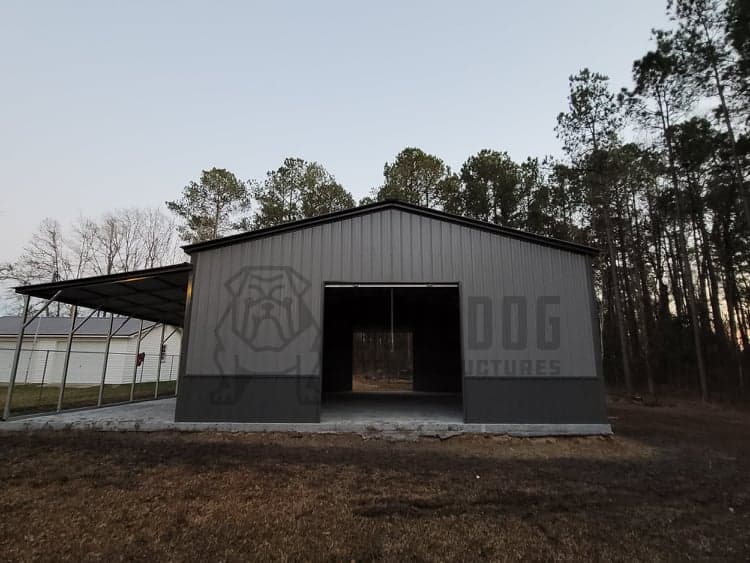
Steel garage installed on a finished concrete slab

Key Takeaways

  • Lifespan

    Steel 20+ years with the frame outlasting the panels. Wood decays once moisture exceeds ~20%.

  • Maintenance

    Steel needs rinsing 1–2× a year. Wood needs repainting, sealing, rot repair and new shingles.

  • Fire

    Steel is non-combustible and often earns lower insurance premiums.

  • Wind

    Up to 170 mph with 12- or 14-gauge frames. Vertical roofing performs best.

  • Cost

    Steel is usually cheaper upfront and clearly cheaper to own.

  • Energy

    Wood is marginally better bare. Steel is better once insulated.

Galvanized steel frame on a finished slab

How Long Does a Metal Building Last Compared to Wood?

Steel buildings last decades longer than comparable wood structures. Bulldog buildings have an expected lifespan of over 20 years and carry a 20-year limited rust-through warranty on panels, with frames typically outlasting the panels themselves.

Wood's weakness isn't strength — timber is structurally strong. It's degradation. Wood absorbs moisture, and once moisture content exceeds roughly 20%, decay becomes likely. That same moisture cycle causes warping, splitting and joint loosening, and any drywall or cladding attached to a timber frame cracks and distorts as the frame moves beneath it.

Steel doesn't absorb moisture, doesn't warp with humidity, and holds its dimensions for the life of the structure. Galvanized, painted, and powder-coated finishes protect against rust and corrosion — the only meaningful degradation path steel has.

Steel panels beside a weathered timber wall

Which Needs Less Maintenance, Metal or Wood?

Steel, by a wide margin — a rinse and clean once or twice a year is generally sufficient.

A wood building needs repainting or resealing on a cycle, treatment against rot and pests, replacement of damaged boards, and eventual roof replacement, since asphalt shingles rarely last the life of the structure.

Steel has no repainting cycle, no shingles, and no rot to cut out and patch. Across twenty years, wood upkeep adds up to a significant share of what the building cost in the first place — which is exactly what buyers comparing sticker prices miss.

Steel workshop interior with vehicle and tool storage

Are Metal Buildings More Fire Resistant Than Wood?

Yes. Steel is non-combustible — it doesn't ignite and adds no fuel to a fire.

Wood is fuel. A timber-framed workshop holding a vehicle, fuel cans and power tools is a materially different fire risk than a steel one holding the same contents.

Insurers price that difference: steel buildings often qualify for lower premiums than comparable wood structures. That’s a recurring annual saving, not a one-off — worth asking your insurer about before you decide.

Steel barn used for feed and livestock equipment

Can Termites Damage a Metal Building?

No. Steel gives termites, carpenter ants, wood-boring beetles and rodents nothing to eat and nothing to nest in.

Termite damage to timber is progressive and often invisible until it's structural. Treatment is ongoing, and in high-pressure regions it becomes a permanent maintenance cost. Wood rot behaves the same way — slow, hidden, expensive once found.

For agricultural buildings, where feed is stored and livestock are worked around, pest resistance is one of the strongest practical arguments for steel.

Braced steel frame with 12-gauge tubing

How Much Wind Can a Metal Building Withstand?

Bulldog buildings resist winds up to 170 mph, using 12- or 14-gauge steel frames with metal roofing and siding. Vertical roofing offers the best wind resistance of the three roof styles.

Certification is what makes the rating meaningful. A certified building is engineered for your county's specific wind load and comes with stamped engineering drawings — the same drawings most jurisdictions require for a permit.

Timber can be engineered for high wind too, but the connections are the weak point: nailed and bolted timber joints loosen as wood moves with moisture, and wind load concentrates stress precisely there.

Vertical roof panels shedding snow

Are Metal Buildings Better Than Wood in Snow?

Yes. Wood homes and pole barns can suffer catastrophic damage under heavy snow loads; engineered steel structures are designed for the loads of the region where they're installed.

Two design details do the work. Steel trusses carry snow across longer spans without intermediate support, and vertical roof panels shed snow instead of letting it collect in horizontal seams. That second point is why vertical roofing is a specification rather than an upgrade anywhere with real winter.

Snow failures in timber buildings tend to be sudden — the structure holds, holds, then fails at a connection.

Crew installing a pre-fabricated steel garage

Is a Metal Building Cheaper Than a Wood Building?

Usually yes, both upfront and over the life of the building.

Upfront: components are pre-fabricated and cut to fit, so on-site labour is a fraction of what framing, roofing and siding a timber building requires. Fewer man-hours on site is where most of the saving comes from. Bulldog’s published starting prices — $15,000 for a 24×40×12 garage, $21,590 for a 30×50×12 — include delivery and professional installation across most of the U.S.

Over time: the gap widens. No repainting, no shingle replacement, no rot repair, no termite treatment, and often lower insurance.

One cost steel does carry: Bulldog recommends and requires a monolithic concrete slab, priced separately from the building. Budget it from the start — it protects your anchoring and your warranty.

Finished steel garage on a residential lot

Do Metal Buildings Add Property Value?

Generally yes — a permitted, permanently anchored building adds functional square footage that appraisers and buyers recognise.

Steel returns more of that investment than timber because of what a purchaser inherits: a structure with years of service left, no deferred maintenance, and no rot or termite history to inspect for.

A twenty-year-old timber outbuilding raises questions at sale — roof condition, treatment history, hidden damage. A twenty-year-old steel building with intact panels is simply an asset.

Insulation fitted between steel wall framing

Are Metal Buildings Energy Efficient?

Once insulated, yes. Bare steel conducts heat, so an uninsulated metal building tracks outdoor temperatures more closely than an uninsulated timber one.

Insulated, the picture reverses. Steel framing is dimensionally stable, so insulation stays where it was fitted and the envelope doesn't develop the gaps a seasoning timber frame creates.

If you’ll heat, cool or work in the building year-round, insulate it — that decision determines your energy costs far more than the frame material does.

Metal vs Wood, Side by Side

  • Lifespan

    Steel
    20+ years, frame longer
    Wood
    Shorter; decays above ~20% moisture
  • Maintenance

    Steel
    Rinse 1–2× yearly
    Wood
    Repaint, seal, rot repair, shingles
  • Fire

    Steel
    Non-combustible
    Wood
    Combustible
  • Termites and rot

    Steel
    Immune
    Wood
    Vulnerable; ongoing treatment
  • Wind

    Steel
    Up to 170 mph, certified to county
    Wood
    Connections loosen over time
  • Snow

    Steel
    Engineered to regional load
    Wood
    Catastrophic failure risk
  • Upfront cost

    Steel
    Usually lower, faster install
    Wood
    Higher labour, longer build
  • Lifetime cost

    Steel
    Lower
    Wood
    Higher
  • Resale

    Steel
    Inspects well, holds value
    Wood
    Deferred maintenance liability
  • Energy (bare)

    Steel
    Weaker
    Wood
    Mildly better
  • Energy (insulated)

    Steel
    Better
    Wood
    Weaker
  • Recyclability

    Steel
    100% recyclable
    Wood
    ~40% of each tree unused

Frequently Asked Questions

How long does a metal building last compared to wood?
Bulldog Steel Structures buildings have an expected lifespan of over 20 years and carry a 20-year limited rust-through warranty, with frames typically outlasting panels. Wood degrades faster because timber absorbs moisture — once moisture content exceeds around 20%, decay becomes likely, and the resulting warping loosens joints and distorts attached cladding.
Is a metal building cheaper than a wood building?
Usually, both upfront and over time. Pre-fabricated steel components are cut to fit, so on-site labour is a fraction of framing, roofing and siding a timber building, and fewer man-hours is where most of the saving comes from. Over the building’s life the gap widens, because steel avoids repainting cycles, shingle replacement, rot repair and termite treatment.
Are metal buildings more fire resistant than wood?
Yes. Steel is non-combustible — it doesn’t ignite and adds no fuel to a fire starting from wiring, machinery or stored materials. Wood is itself fuel. Insurers recognise the difference, and steel buildings often qualify for lower premiums, making it a recurring saving rather than a one-off benefit.
Can termites damage a metal building?
No. Steel provides nothing for termites, carpenter ants, wood-boring beetles or rodents to eat or nest in. Timber structures need ongoing treatment, particularly in regions with heavy termite pressure, and damage is often invisible until it becomes structural.
How much wind can a metal building withstand?
Bulldog buildings use 12- or 14-gauge steel frames with metal roofing and siding and resist winds up to 170 mph. Vertical roofing gives the best wind resistance of the three roof styles. Every building can be specified for local conditions, and certified buildings include stamped engineering drawings rated for your county’s wind and snow loads.
Are metal buildings better than wood in snow?
Yes. Wood homes and pole barns can face catastrophic damage under heavy snow loads, which is much less of a concern with engineered steel. Steel trusses carry load across longer spans without intermediate support, and vertical roof panels shed snow instead of letting it collect in horizontal seams.
Does a metal building add value to a property?
Generally yes. A permitted, permanently anchored building adds functional square footage that appraisers and buyers value. Steel returns more of that investment than timber because a purchaser inherits a structure with years of service remaining, no deferred maintenance, and no rot or termite history to investigate.
Do metal buildings need less maintenance than wood?
Considerably less. A rinse and clean once or twice a year is generally sufficient for steel. Wood requires repainting or resealing on a cycle, pest and rot treatment, board replacement and eventual roof replacement. Across two decades that upkeep adds up to a significant share of the building’s original cost.
Does a metal building need a concrete foundation?
Bulldog recommends and requires a monolithic concrete slab for our structures. Footers are typically 12 inches wide and deep for buildings 12 to 30 feet wide, and 24 inches wide and deep above 30 feet. The slab is a separate cost from the building and protects both your anchoring and your warranty.
Which roof style is best for a metal building?
Vertical roofing is the strongest choice, with the best wind resistance, and it sheds snow and rain instead of collecting it in seams. It is also required on any building over 35 feet long. Regular (rounded) and boxed eave styles are available up to 30 feet wide and suit milder climates and traditional house-matching looks.
Is it faster to build with steel or wood?
Steel, considerably. Components arrive pre-fabricated and cut to fit, so installation of a standard building typically takes a day or so once the site is prepared, against weeks for stick-built timber construction. That speed is also where much of the cost saving originates.

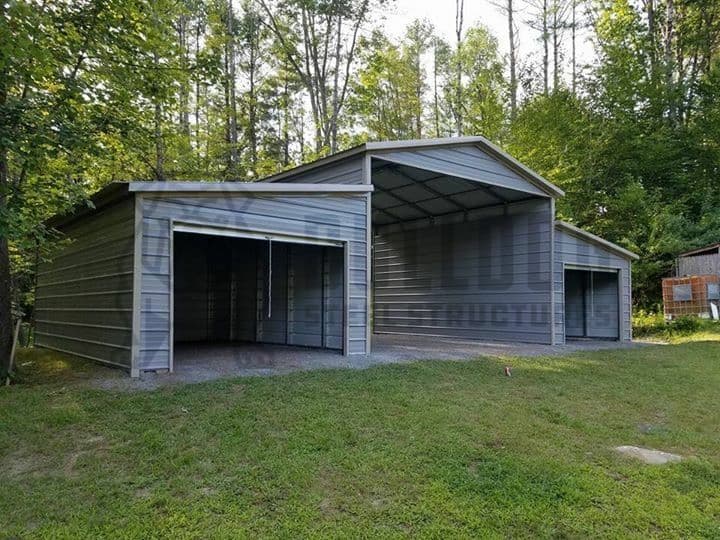
Two Specifications Do Most of the Work

Wood makes sense if traditional appearance is the priority and you accept the maintenance that comes with it. For everything else — lifespan, upkeep, fire, pests, wind, snow, lifetime cost and resale — steel is the better building.

Certify it for your county's wind and snow loads, and choose vertical roofing if you're in weather. Those two decisions do more for the life of your building than anything else you'll choose.

At Bulldog Steel Structures, delivery and professional installation are included across most of the U.S., every building can be specified to local wind and snow requirements, and financing and rent-to-own with no credit check are available on every structure.

Still deciding?

Talk It Through Before You Buy

A short call covers your county's wind and snow requirements, roof style, sizes and pricing — with delivery and professional installation included.