Pre-Engineered Metal Buildings vs Traditional Construction: The Honest 2026 Comparison
By Bulldog Steel Structures • Updated June 2026
If you’re planning a new building — a workshop, garage, commercial space, agricultural shelter, or residential project — you’re choosing between two fundamentally different construction approaches. Traditional construction has been the default for over a century. Pre-engineered metal buildings (PEBs) are the newer alternative that’s taken significant market share over the past 30 years, particularly for commercial, agricultural, and increasingly residential builds.
Both methods produce strong, lasting buildings. They’re just very different in how they’re built, what they cost, how long they take, and where each performs best.
This 2026 guide is an honest comparison of pre-engineered vs traditional construction. No sales pitch — just the practical trade-offs across speed, cost, customization, durability, and where each method makes more sense. By the end, you’ll know which approach fits your specific project.
What’s the Difference Between Pre-Engineered and Traditional Construction?
What Is a Pre-Engineered Metal Building?
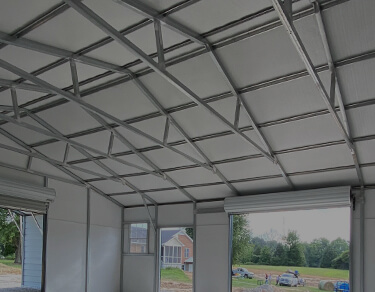
A pre-engineered Steel Buildings in North Carolina is a structure designed and manufactured in a factory, then shipped to your site for assembly. Every component — framing, panels, fasteners, doors, trim — is pre-cut, pre-drilled, and pre-engineered to fit together exactly. Your builder bolts the building together rather than cutting and measuring on-site.
The framing is typically steel (either tube-frame or red-iron I-beam construction). Walls and roof are metal panels. Custom add-ons like insulation, windows, garage doors, and trim are included in the kit or installed during assembly.
What Is Traditional Construction?
Traditional construction (also called stick-built or conventional construction) builds the structure on-site from raw materials. Lumber arrives in standard lengths and is cut to size by a framing crew. Foundations are poured, walls are framed, sheathing is added, roofing is built piece by piece, and exterior cladding (siding, brick, stucco) is applied on-site.
This method has been the default for residential construction for over a century and remains common for custom homes, historic restoration, and unique architectural designs.
Side-by-Side: Pre-Engineered vs Traditional Construction
Here’s how the two methods compare across the factors that matter most:
|
Factor |
Pre-Engineered Metal |
Traditional Construction |
|
Construction time |
Days to weeks |
Months to over a year |
|
Primary materials |
Steel (framing + panels) |
Wood lumber + various cladding |
|
Foundation needed |
Slab, gravel, or anchored ground |
Concrete slab or full foundation |
|
Cost (typical) |
Lower per square foot |
Higher per square foot |
|
Customization freedom |
High within standard sizes |
Maximum (any design) |
|
Architectural flexibility |
Good (colors, trim, layout) |
Excellent (any shape/style) |
|
Skilled labor needed |
Standard installation crew |
Multiple specialized trades |
|
Weather impact during build |
Minimal (fast assembly) |
Significant (slows progress) |
|
Typical lifespan |
50+ years |
50-100+ years (with maintenance) |
|
Maintenance need |
Minimal |
Significant (paint, repairs) |
|
Termite/rot risk |
None (steel) |
Significant (wood) |
|
Fire resistance |
Excellent (steel) |
Lower (wood) |
|
Energy efficiency |
Excellent with insulation |
Good to excellent |
|
Resale value |
Strong, growing acceptance |
Strong, traditional preference |
|
Best for |
Commercial, agricultural, modern residential |
Historic, custom architectural, HOA-restricted |
The pattern is clear: traditional construction wins on architectural flexibility and historic aesthetics. Pre-engineered wins on speed, cost, durability, low maintenance, and almost everything practical. For most non-architectural projects in 2026, pre-engineered is the smarter choice.
Construction Speed: Where PEBs Shine Most
This is the most dramatic difference between the two approaches, and the one most customers notice first.
Traditional Construction Timeline
Traditional construction is a sequential process: foundation, then framing, then sheathing, then roofing, then exterior cladding, then interior work. Each stage has to be completed before the next can start. Weather delays one stage, and everything else slides.
For a typical residential garage or workshop, traditional construction usually takes 2-4 months from groundbreaking to finished structure. Larger commercial buildings can take 6-12+ months. Weather, labor availability, supply chain issues, and unforeseen challenges regularly stretch these timelines further.
PEB Construction Timeline
Pre-engineered buildings flip the process. The factory pre-engineers and pre-cuts everything before your project even starts. Once your kit ships and arrives on-site, installation typically takes a few days for residential sizes and 1-3 weeks for larger commercial buildings.
Including manufacturing time (usually a few weeks after order) and scheduling, the full timeline from order to finished PEB is typically 4-10 weeks. Compare that to 4-12 months for traditional construction — PEBs are usually 3-4x faster.
Why This Matters
Faster construction isn’t just about getting your building sooner. It also means lower financing costs, less weather risk, less site disruption, and the ability to start using your space (or generating revenue from a commercial space) months earlier. For business owners, the time savings often outweigh every other comparison factor.
Cost: The Picture Has Changed
Cost is where most buyers compare these two construction methods, and the answer has shifted significantly in the past 10 years.
How PEBs Save Money
Pre-engineered buildings cost less per square foot than traditional construction for several reasons:
- Factory production reduces material waste
- Less skilled labor needed (one crew vs multiple trades)
- Shorter timeline means lower labor cost overall
- Less weather risk and fewer schedule delays
- Predictable pricing (fewer surprise costs during build)
- Standardized engineering reduces design costs
When Traditional Construction Costs More
Traditional construction has higher per-square-foot costs primarily because of labor. A traditional residential build employs framers, roofers, siders, drywallers, electricians, plumbers, painters, finish carpenters, and others — each adding to the labor cost. Material waste is also higher because cuts happen on-site from standard lumber sizes.
When Traditional Can Be Cheaper
Traditional construction can sometimes win on cost for:
- Very small structures (sheds and outbuildings under 200 sq ft)
- DIY builds with inexpensive lumber
- Properties where homeowner has built-in labor (family contractor, etc.)
- Highly customized non-standard shapes that PEB kits don’t handle efficiently
Lifetime Cost
Beyond the upfront price, PEBs typically have significantly lower lifetime cost because they require less maintenance, last longer without major repairs, and often qualify for lower insurance premiums due to fire resistance.
Design Flexibility and Customization
PEB Design Options
Modern pre-engineered buildings offer more design flexibility than people realize. You can customize:
- Size (within standard width and length increments)
- Leg height (for vehicles, equipment, RVs)
- Roof style (regular, A-frame, vertical)
- Steel gauge (14-ga standard, 12-ga heavy-duty)
- Color combinations (dozens of options for walls, roof, trim)
- Doors and windows (number, size, placement)
- Wainscoting (two-tone wall treatment)
- Gable ends and overhangs
- Insulation type and amount
- Interior partition walls
- Specialty finishes (woodgrain, brushed metal)
For custom metal buildings, these options combine to create distinctive structures — modern residential, traditional rural, industrial commercial, or anything in between.
Where Traditional Construction Has the Edge
If you want truly unique architectural shapes — curved walls, irregular footprints, complex multi-roof designs, historic recreations, or designer architectural features — traditional construction is more flexible. PEBs work best within rectangular footprints and standard configurations. Push beyond that and PEBs become more expensive or impossible, while traditional construction handles it routinely.
Traditional also wins for matching historic aesthetics. Period homes, restored barns, and architecturally significant properties often need traditional materials and methods to look right.
Durability and Longevity
PEB Durability
Pre-engineered steel buildings are built for long life. Steel doesn’t rot, warp, or attract pests. It’s fire-resistant, resistant to severe weather, and dimensionally stable under temperature changes. Most quality PEBs come with multi-decade warranties on both the structure (often 20+ years) and the panels (often 25-40 years).
Properly built PEBs routinely last 50+ years with minimal maintenance — just periodic carport-style cleaning and inspection. Many last 75-100 years with proper care.
Traditional Construction Durability
Traditional construction can also produce extremely long-lasting buildings — there are wooden barns and farmhouses still standing after 150 years. But it requires ongoing maintenance to reach that lifespan. Wood is vulnerable to rot, termites, carpenter ants, and weather damage. Foundations can settle. Roofs need replacement every 20-30 years. Paint needs reapplication every 5-7 years.
Without consistent maintenance, traditional construction typically lasts 30-60 years before major work is required. With diligent maintenance, it can last centuries.
Weather Resistance
Both methods can be engineered for severe weather, but PEBs are typically engineered to specific wind-load and snow-load ratings from the factory. Traditional construction relies on the local contractor to build to code, which varies in execution quality. In hurricane, tornado, and heavy-snow regions, properly engineered PEBs consistently outperform stick-built construction.
When Does Traditional Construction Make More Sense?
In the interest of giving you the honest answer rather than just selling PEBs, here are the situations where traditional construction is the better choice:
- Historic districts and restoration: If you’re restoring a historic structure or building in a district that requires period-accurate materials and aesthetics, traditional construction is often the only option.
- Custom architectural design: If you want unique shapes, curved walls, irregular footprints, or complex multi-level structures, traditional construction handles design freedom that PEBs can’t match.
- HOA restrictions: Some neighborhoods require specific exterior materials (wood, brick, stucco) that PEBs can’t replicate authentically.
- Very small structures: For sheds and small outbuildings under 200 sq ft, DIY traditional builds with available lumber can be cheaper than PEB kits.
- DIY with family/local labor: If you have built-in low-cost labor (family contractor, sweat equity), the cost equation can flip in favor of traditional methods.
For everyone else — most workshop, garage, agricultural, commercial, and standard residential builds — PEBs are the smarter choice in 2026. The combination of speed, cost, durability, low maintenance, and customization options is hard to beat with traditional methods.
Best Uses for Pre-Engineered Metal Buildings
PEBs work for a wide range of applications. Here are the most common ways our customers use them:
- Garages: Single-vehicle to multi-vehicle, including RV and boat storage.
- Workshops: Personal hobby spaces, professional workshops, and dedicated tool storage.
- Barns and agricultural buildings: Livestock shelter, hay storage, equipment cover, and farm operations.
- Commercial spaces: Retail, service shops, restaurants, churches, schools, and offices.
- Industrial facilities: Manufacturing, warehousing, distribution, and processing facilities.
- Barndominiums: Combined living and workshop spaces — one of the fastest-growing categories.
- RV and boat covers: Tall, wide structures designed specifically for recreational vehicle storage.
- Storage units and self-storage: Commercial storage operations.
If your project is a rectangular building with practical purpose and you want it built fast and affordably, a PEB is almost certainly the right choice.
Sustainability and Environmental Impact
Sustainability is increasingly important to buyers, and there’s a real difference between the two construction methods.
PEB Environmental Benefits
- Less material waste due to factory pre-cutting and pre-engineering
- Steel is highly recyclable — most steel building components contain recycled content
- At end of life, steel buildings can be fully recycled rather than landfilled
- Shorter construction timeline means less fuel for equipment and worker transportation
- Tighter building envelope (when properly insulated) reduces lifetime energy use
- Smaller foundation requirements reduce concrete and excavation impact
Traditional Construction Environmental Impact
- Higher material waste (often 10-15% of lumber ends up as cutoffs)
- Lumber requires significant forestry resources, though it is renewable
- Longer build times mean more equipment fuel and worker miles
- End-of-life often involves landfill disposal of mixed materials
Both methods can be built sustainably, but PEBs have a structural advantage on most environmental measures.
Frequently Asked Questions
What is a pre-engineered metal building?
A pre-engineered metal building (PEB) is a structure that’s designed and manufactured in a factory, then shipped to your site for assembly. All components — framing, panels, fasteners, doors, trim — are pre-cut, pre-drilled, and pre-engineered to fit together exactly. PEBs use steel for both the framing and panels, and can be installed in a fraction of the time of traditional stick-built construction.
Are pre-engineered buildings cheaper than traditional construction?
In most cases, yes — pre-engineered metal buildings cost less per square foot than traditional construction because of reduced material waste, less skilled labor required, faster build times, and more predictable pricing. Over the building’s lifetime, PEBs also typically cost less because they require less maintenance, fewer repairs, and often qualify for lower insurance premiums.
How long does it take to build a pre-engineered metal building?
Most pre-engineered buildings can be installed in a few days to a few weeks after delivery, depending on size and customization. The full timeline from order to finished building is typically 4-10 weeks, including manufacturing and scheduling. Traditional construction usually takes 3-12 months for comparable structures.
Are pre-engineered metal buildings as durable as traditional construction?
Yes — properly built PEBs typically last 50+ years with minimal maintenance, similar to or longer than traditional construction. Steel doesn’t rot, warp, or attract pests, and modern coatings resist rust for decades. Quality PEBs come with multi-decade warranties on both the structure and the panels. In severe weather regions (hurricane, tornado, heavy snow), properly engineered PEBs often outperform traditional construction.
Can pre-engineered buildings be customized?
Yes, modern PEBs offer significant customization including: size variations, leg height options, roof styles, steel gauge upgrades, color combinations, doors and windows, wainscoting, gable ends and overhangs, insulation options, interior partitions, and specialty finishes like woodgrain or brushed metal. While not as flexible as traditional construction for unusual architectural shapes, PEB customization covers most practical building needs.
Are pre-engineered buildings good for residential use?
Yes, increasingly so. Pre-engineered buildings are popular for residential garages, workshops, RV covers, and barndominiums (combined living and work spaces). With insulation, finished interiors, and proper customization, PEBs can serve as full residential structures. Some historic districts and HOAs restrict their use, so check local requirements before ordering.
Do pre-engineered buildings require permits?
Most pre-engineered buildings require building permits, especially for larger sizes or commercial use. Permit requirements vary by city, county, and state, and may include specific wind-load and snow-load engineering certifications. A reputable PEB dealer provides certified stamped engineering drawings to support your permit application. Always check with your local building department before ordering.
What’s the difference between prefab and pre-engineered?
The terms are often used interchangeably, but technically: prefab (prefabricated) refers to any building manufactured off-site and assembled on-site, while pre-engineered specifically refers to buildings designed and engineered before manufacturing using standardized components. Most pre-engineered buildings are prefab, but not all prefab buildings are pre-engineered. For most practical purposes, the terms mean the same thing.
Can I get a pre-engineered building with no credit check?
Yes, rent-to-own programs let you get a pre-engineered metal building with no credit check. You make a small first-month payment, take delivery, and pay monthly until you own it. This makes PEBs accessible to buyers with limited or poor credit and requires significantly less upfront money than traditional bank financing — which typically isn’t even available for self-built traditional construction.
What size pre-engineered metal building can I get?
Pre-engineered metal buildings come in a wide range of sizes — from small 12×21 single-car structures to large commercial buildings exceeding 100 feet wide. Standard residential and small commercial sizes range from 20×20 to 60×100. Larger commercial and industrial buildings can be built with red-iron framing for maximum span and load capacity. Talk to your dealer about which sizes work best for your specific use case.
|
Get Your Free PEB Quote Today Custom sizes, professional installation, financing and rent-to-own options available. No commitment, no pressure. |
The Bottom Line
If you’re choosing between a pre-engineered metal building and traditional construction in 2026, the practical math usually favors pre-engineered. Faster construction, lower upfront cost, longer durability with less maintenance, better severe-weather performance, and increasingly sophisticated customization options make PEBs the smarter choice for most modern building projects.
Traditional construction still has its place — for historic districts, custom architectural designs, HOA-restricted neighborhoods, very small structures, and DIY builds with built-in labor. But for the typical garage, workshop, agricultural building, commercial space, or modern residential project, a pre-engineered metal building delivers more value with less hassle.
At Bulldog Steel Structures, we deliver pre-engineered metal buildings across the country in a wide range of sizes, gauges, and customization options. Whether you need a garage, barn, custom building, or commercial space, our team helps you spec the right design for your specific project. We also offer financing options and rent-to-own programs with no credit check to make your PEB affordable for any budget.
Have questions or want to talk through your specific project? Contact us today and our team will help you decide whether a PEB is right for your needs.
delivering & installing
throughout
the united states
Bulldog’s metal barns, garages, and carports are available for delivery and installation in most of the U.S. Whether you’re a homeowner in Maine, a rancher in Texas, or a small business owner in California, you’ll get to-your-door delivery and professional installation, so your building will be sturdy and reliable for years to come.
See Service Area