Metal Garage Buildings: The Complete 2026 Buyer’s Guide

Whether you need secure parking for your vehicles, a dedicated workshop, extra storage, or all three at once, a metal garage building is one of the smartest investments you can make for your property. They go up fast, cost a fraction of traditional construction, last for decades, and can be customized to fit almost any need or budget.
But buying a metal garage involves a lot of decisions — size, gauge, roof style, doors, foundation, customization, and how to pay for it. Getting those choices right the first time saves you money and frustration down the road.
This complete 2026 buyer’s guide walks you through everything you need to know about metal garage buildings, so you can make a confident, informed decision.
What Is a Metal Garage Building?
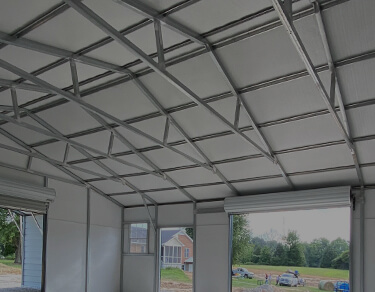
A metal garage building is a structure made primarily from steel framing and steel panels, engineered and prefabricated before being delivered to your property and assembled on site. Unlike traditional garages built board by board, metal garages arrive as a complete kit of pre-cut, pre-drilled components that an installation crew assembles quickly.
Metal garage buildings come in two broad construction types. Tube-framed (or ‘box-tube’) garages use square steel tubing for the frame and are the most common choice for residential and light commercial use. Red-iron (or ‘I-beam’) garages use heavier structural steel and are typically used for larger commercial buildings or where maximum strength and clear-span width are required.
For most homeowners and small businesses, a tube-framed metal garage offers the best balance of strength, cost, and versatility. Red-iron construction becomes worth the extra cost when you need very wide clear-span interiors or are building at a commercial scale.
Why Choose a Metal Garage Over a Traditional Garage?
Metal garage buildings have become the default choice for a growing number of property owners. Here’s why:
Lower Cost
Metal garages typically cost 30-50% less than a comparable wood-frame garage. The savings come from prefabricated components, dramatically lower labor costs, and minimal material waste. A budget that would buy you a modest traditional garage often buys a significantly larger metal one.
Faster Installation
A traditional garage can take 6-12 weeks to build. A metal garage of the same size is typically installed 1-3 days after delivery. That means less disruption to your property and the ability to start using your garage almost immediately.
Durability and Low Maintenance
Steel doesn’t rot, warp, or attract termites — three of the most common causes of structural problems in wood buildings. A quality metal garage lasts 50 years or more and needs only minimal maintenance: occasional rinsing, gutter checks, and seal inspections. There’s no repainting every few years like a wood structure requires.
Weather Resistance
Metal garages can be engineered to handle high wind speeds, heavy snow loads, and severe storms. Steel is non-combustible, and metal roofing stands up to hail far better than asphalt shingles. In storm-prone regions, a properly certified metal garage offers real peace of mind.
Versatility
A metal garage isn’t just for cars. The same building can serve as a workshop, home gym, hobby space, equipment storage, small business shop, or a combination of uses. With the right add-ons, it can grow and change as your needs do.
Metal Garage Sizes: How to Choose the Right One
Choosing the right size is the most important decision in the entire process. Too small and you’ll regret it within a year; too large and you’ve paid for space you don’t use. Here’s how to think about it.
Common Metal Garage Sizes and What Fits
|
Size |
Best For |
Typical Use |
|---|---|---|
|
12×20 – 12×25 |
1 car |
Single vehicle, compact storage |
|
18×21 – 20×20 |
1-2 cars |
Two compact cars or 1 car + workspace |
|
24×25 – 24×30 |
2 cars |
Two full-size vehicles comfortably |
|
24×36 – 30×40 |
3 cars or 2 cars + shop |
Family with multiple vehicles, hobby space |
|
30×50 – 40×60 |
3-4 cars, large workshop |
Workshop, business, equipment storage |
|
40×80 and larger |
Commercial / fleet |
Commercial use, RV + vehicles, warehouse |
Don’t Forget Height
Width and length get all the attention, but leg height (the height of the side walls) matters just as much. Standard residential garages often have 8-10 foot legs. If you plan to store an RV, a lifted truck, a boat on a trailer, or want to install a car lift, you’ll need 12-14 foot legs or taller. It’s far cheaper to build tall from the start than to wish you had later.
A Simple Sizing Rule
Whatever size you think you need, consider going one size larger. Storage needs almost always grow over time, and the cost difference between, say, a 24×30 and a 24×36 is usually modest compared to the value of the extra space. The most common regret we hear from customers is wishing they’d built bigger.
Understanding Steel Gauge
Steel gauge refers to the thickness of the steel used in your garage’s framing. Counterintuitively, a lower gauge number means thicker, stronger steel. The two most common framing gauges are 14-gauge and 12-gauge.
14-gauge tubing is the standard for most residential metal garages and is perfectly adequate for typical conditions. 12-gauge tubing is thicker and stronger, recommended for larger buildings, areas with heavy snow or high winds, and anyone who simply wants maximum durability. Many manufacturers offer 12-gauge as an upgrade.
Roof and wall panels are also measured in gauge, typically 29-gauge (standard) or 26-gauge (heavier-duty upgrade). If you live in a region with severe weather, upgrading panel gauge is usually money well spent.
Roof Styles: Regular, A-Frame, and Vertical
Metal garages come with three roof options, and the right choice depends on your climate and budget.
Regular Roof
The most economical option. Panels run horizontally and the roof has rounded corners. Regular roofs are fine for mild climates and shorter buildings, but they’re not ideal where heavy rain or snow needs to shed quickly.
A-Frame (Boxed Eave) Roof
A mid-tier option with a horizontal-panel roof and a more finished, house-like appearance with boxed eaves. A-frame roofs look better than regular roofs and handle weather moderately well.
Vertical Roof
The premium and most recommended option, especially for larger garages or harsh climates. Panels run vertically from ridge to eave, allowing rain, snow, and debris to slide off easily rather than collecting on the roof. For any garage longer than about 30 feet, or anywhere with real winter weather, a vertical roof is strongly recommended and often required by the manufacturer.
Customization Options
One of the biggest advantages of metal garage buildings is how customizable they are. Common options include:
- Garage doors — roll-up or overhead, in various sizes to fit everything from compact cars to RVs
- Walk-in doors — standard entry doors for convenient access without opening the main garage door
- Windows — for natural light and ventilation
- Insulation — essential if you’ll heat or cool the space, or use it as a workshop year-round
- Color choices — roof, walls, and trim can usually be specified separately for a custom look
- Wainscoting — a two-tone wall treatment for a more finished appearance
- Lean-tos — attached side structures for extra covered space at lower cost
- Gable ends and overhangs — for a more residential, polished look
- Extra-tall legs — for RVs, lifts, or mezzanines
A 3D design tool makes it easy to visualize these options and see how they affect both the look and the price of your garage before you commit.
Foundation Options for Metal Garages
Your metal garage needs a stable surface to sit on. There are three common foundation choices.
Concrete Slab
A poured concrete slab is the gold standard. It provides a level, durable, permanent surface, allows the garage to be anchored securely, keeps moisture out, and is required if you want a true finished garage floor. It’s the most expensive option but the best for long-term value, and it’s necessary for most permitted residential garages.
Gravel Pad
A compacted gravel pad is a budget-friendly option that provides drainage and a reasonably stable base. It works well for storage buildings and agricultural use, though it doesn’t offer the clean finished floor of concrete.
Bare Ground
Some buildings can be installed directly on level ground using ground anchors. This is the cheapest option, suitable for simple carports and basic storage, but it’s not recommended for finished garages or buildings that will house valuable vehicles long-term.
Whatever you choose, the surface must be level. An uneven foundation causes installation problems and can compromise the structure. Talk to your dealer about ground preparation before delivery day.
How Much Does a Metal Garage Building Cost in 2026?
Metal garage prices vary based on size, gauge, roof style, customization, your location, and current steel prices. As a general guide for 2026, a basic single-car metal garage starts in the low-to-mid four figures, while a fully-customized large garage or shop can reach the mid five figures.
The factors that most affect your price are building size (the biggest driver), steel gauge, roof style (vertical costs more than regular), the number and size of doors and windows, insulation, and delivery distance. Site preparation and foundation are usually separate costs handled by you or a local contractor.
Because steel prices fluctuate and every build is different, the only way to get an accurate number is a custom quote. A good quote will itemize the base building, each add-on, delivery, and any available financing or rent-to-own payment options.
How to Pay for a Metal Garage
There are three main ways to pay for a metal garage building, and the right one depends on your finances and credit situation.
Paying Cash
If you have the funds available, paying cash is always the cheapest option overall — no interest, no markup. You own the building outright from day one.
Financing
Traditional financing through a bank or lender spreads the cost over time. If you have good credit, financing typically costs less than rent-to-own and lets you own the building immediately. Expect a credit check and a down payment, usually 10-20% of the price.
Rent-To-Own
Rent-to-own lets you take delivery of your garage with a small first-month payment and no credit check, then make monthly payments until you own it. It’s the easiest option to qualify for and requires the least money upfront, though it costs more in total than cash or financing. Rent-to-own is an excellent choice for buyers with limited or poor credit, or anyone who needs a garage quickly without a large down payment. Many rent-to-own agreements also offer a 90-day same-as-cash buyout that lets you avoid the markup entirely if you can pay it off early.
Installation: What to Expect
Once you’ve ordered your metal garage, here’s what the process looks like:
- Order and customization — finalize your specs and place your order
- Site preparation — you prepare a level surface (concrete, gravel, or ground) before delivery
- Manufacturing — your garage components are fabricated, typically over 2-6 weeks
- Delivery — components are delivered to your property on the scheduled date
- Installation — a professional crew assembles the garage, usually in 1-3 days for residential sizes
- Final walkthrough — you inspect the finished building and confirm everything is correct
Professional installation is included with most metal garage purchases. Always confirm what’s included in your quote — delivery distance, installation, and anchoring should all be spelled out clearly.
Permits and Local Codes
Most areas require a permit to install a metal garage, especially if it’s on a concrete foundation or connected to utilities. Permit requirements, wind and snow load ratings, setback rules, and zoning vary widely by state, county, and even neighborhood.
Before you order, check with your local building department about permit requirements and any certified engineering specifications you’ll need (wind speed and snow load ratings are the most common). A reputable dealer can provide certified, stamped engineering drawings for your area when required. Handling permits correctly upfront avoids fines and costly problems later.
Common Mistakes to Avoid
Learn from the most frequent mistakes metal garage buyers make:
- Buying too small — the number one regret. Size up if you’re unsure.
- Ignoring leg height — standard height won’t fit RVs, lifted trucks, or car lifts.
- Skipping the vertical roof in snow country — horizontal panels collect snow and debris.
- Forgetting insulation — retrofitting insulation later is far more expensive than including it upfront.
- Not checking permits first — assuming you don’t need one can lead to fines or forced removal.
- Comparing quotes on different specs — a low price often means lighter steel or a cheaper roof.
- Neglecting site prep — an unlevel surface causes installation problems and structural issues.
Frequently Asked Questions
How long do metal garage buildings last?
A quality metal garage building lasts 50 years or more with minimal maintenance. Steel framing doesn’t rot, warp, or attract pests, and modern panel coatings resist rust and fading for decades. Most metal garages come with multi-decade warranties on both the structure and the roof panels.
Are metal garages cheaper than wood garages?
Yes, metal garage buildings typically cost 30-50% less than comparable wood-frame garages. The savings come from prefabricated components, much lower labor costs, faster installation, and minimal material waste. Metal garages also cost less to maintain over their lifetime.
Do I need a concrete foundation for a metal garage?
Not always, but it’s recommended for finished garages. A concrete slab provides the best base, allows secure anchoring, and is usually required for permitted residential garages. Gravel pads and level bare ground are acceptable lower-cost alternatives for storage buildings and agricultural use.
How long does it take to install a metal garage?
After delivery, most residential metal garages are installed by a professional crew in 1-3 days. The full timeline from order to finished building is typically 3-8 weeks, with most of that time being manufacturing and delivery scheduling.
Can a metal garage be insulated?
Yes, metal garages can be fully insulated. Insulation is strongly recommended if you plan to heat or cool the space, use it as a workshop, or live in a climate with temperature extremes. Insulating during the build is much cheaper than retrofitting later.
What size metal garage do I need for 2 cars?
A 24×25 to 24×30 metal garage comfortably fits two full-size vehicles. If you also want workshop or storage space alongside your cars, consider a 24×36 or 30×40 instead. Remember to size up if you’re unsure — extra space is rarely regretted.
Can I get a metal garage with no credit check?
Yes, rent-to-own programs let you get a metal garage building with no credit check. You make a small first-month payment, take delivery, and pay monthly until you own it. This makes metal garages accessible to buyers with limited or poor credit.
Do metal garages add value to my property?
Yes, a well-built metal garage can add value to your property by providing secure storage, workspace, and protected parking. For rural, agricultural, and many residential properties, the added utility and the durability of steel construction make metal garages a solid long-term investment.
The Bottom Line
A metal garage building is one of the most practical, cost-effective structures you can add to your property. It costs far less than traditional construction, goes up in days instead of months, lasts for decades with almost no maintenance, and can be customized to fit nearly any need or budget.
The keys to a successful purchase are simple: size up rather than down, choose the right roof and gauge for your climate, plan your foundation properly, sort out permits before you order, and pick the payment method that fits your situation. Get those decisions right and your metal garage will serve you well for 50 years or more.
Ready to take the next step? Design the garage you have in mind, request a free quote, and review your options — there’s no commitment until you decide to move forward.
delivering & installing
throughout
the united states
Bulldog’s metal barns, garages, and carports are available for delivery and installation in most of the U.S. Whether you’re a homeowner in Maine, a rancher in Texas, or a small business owner in California, you’ll get to-your-door delivery and professional installation, so your building will be sturdy and reliable for years to come.
See Service Area